
Origins
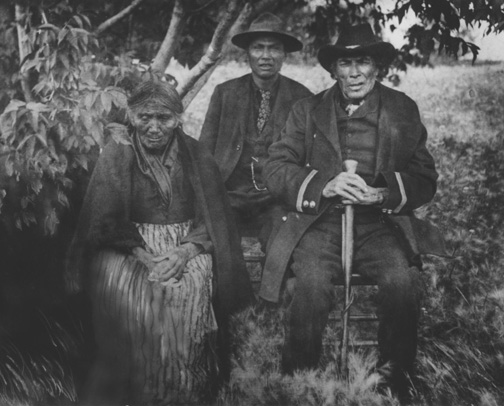
The people of Keeseekoowenin take their name from Chief Keeseekoowenin, who led our ancestors to settle on the reserve in 1875. Before this, we were known as the Riding Mountain Band, reflecting our deep connection to the Riding Mountains, and as the Okanase Band, named after Michel Cardinal (Okanase, or “Little Bones”).
After Okanase’s passing around 1870, his son Mekis, meaning “The Eagle,” became Chief and led our people during the signing of Treaty 2 in 1871. Upon Mekis’ death in 1874-75, leadership passed to his half-brother, Chief Keeseekoowenin, under whom our First Nation became known by its current name.
Today
The Keeseekoowenin Ojibway First Nation encompasses three reserves:
◆ IR 61: Keeseekoowenin First Nation: The main reserve adjacent to the of Elphinstone, Manitoba.
◆ IR 61A: The Clear Lake reserve, nestled on the shores of Clear Lake in Riding Mountain National Park.
◆ IR 61B: The Bottle Lake reserve, situated near what was originally known as Battle Lake.
Our community continues to honor our history and connection to the land while building a strong future for our people. We invite you to explore more about our culture, history, and ongoing initiatives as we work together to preserve and enhance our heritage.
The Community Background:
The members take an active role in the community development and they provide a strong and effective role in the direction that the community should take in its approach to be economically self-sufficient. The Elders of the community are actively involved in giving guidance to the leadership and the community. The community has varied religious and spiritual beliefs. Some members still live and maintain their traditional culture and the spiritual teachings past onto them by their fathers and grandfathers. They believe the mother earth is a keeper of all things and the Ojibway people are the stewards of the land, the lakes and the rivers. The animals and the birds are sacred and are protected. We firmly believe that each generation must do everything they can to protect and preserve their culture, the lands, the rivers, the lakes and all living creatures.
Our Reserves:
The Keeseekoowenin Ojibway First Nation has 3 reserve lands in separate locations. The main reserve 61 includes acres of land and is situated south of Riding Mountain National Park. The main residential site is situated near the town of Elphinstone. The Second reserve 61 A is located within Riding Mountain National Park on the North West Shore of Clear Lake. This parcel of land was set aside to be used as a fishing station and hunting base camp. The third is located in between the two other reserves and is called Bottle Lake 61B. This land was allotted for the purpose of producing hay and a stop over to rest the horses when traveling to and from Clear Lake.
The reserve includes some acres of mixed forest, farm and hay pastures. The topography varies from each reserve. The Main reserve is situated in a valley setting with the Little Saskatchewan River Flowing through. Bottle lake is a small pasture with hay and small brush. The Clear lake reserve consists of forest, with the predominant species being hardwoods poplar and soft woods White Pine. There are pockets of other softwood spruce and cedar.
Historical Research: Keeseekoowenin – Digital History – Community Pictures